
![[2025 Edition] Importance of Integrating CRM and Web Customer Service Tools: Case Studies and Effects](https://images.microcms-assets.io/assets/c097f8ce630d4dc08c826d3fb9b47604/8814b95adab648918fb1403522b31c13/3_c0616e13_c5c4a1ea.webp?fm=webp)
On the Importance of Integrating "CRM" and "Web Customer Service Tools"
In modern business, the integration of "CRM" and "web customer service tools" can be considered essential as a method for building powerful relationships with customers.
In this article, we will provide a detailed explanation of how CRM and web customer service tools provide value to businesses. We will cover everything from "Basic Information on CRM and Web Customer Service Tools" to "Customer Segmentation," "Personalization," "Strategies for Improving Customer Engagement," "Success Stories," and "Future Insights."
We hope that through this article, you will understand how to leverage the power of strategies that combine CRM and web customer service tools to lead your business to success and enhance competitiveness.

1. Basic Information on "CRM" and "Web Customer Service Tools"
First, we will explain the basic information regarding CRM and web customer service tools.
CRM stands for "Customer Relationship Management." It refers to managing customer information, behavior history, and relationships to build and promote good relationships with customers. CRM has become an indispensable element in modern business strategies. It is a strategic approach to building and strengthening sustainable relationships with customers, with the primary goal of maximizing the value a company provides to its customers and thereby increasing revenue. Companies that practice CRM can deepen their insights into customers, respond to their needs and requests, and strengthen their competitiveness.
On the other hand, "web customer service tools" are software or platforms designed to improve customer response and communication in an online environment. These tools enable real-time interaction on websites, serving to resolve customer questions and doubts and provide information. By integrating web customer service tools with CRM, companies can achieve more effective construction and maintenance of customer relationships and enhance their competitiveness.

2. Importance of Integrating "CRM" and "Web Customer Service Tools"
We have reviewed the basic information of CRM and web customer service tools. Here, we will explain why it is necessary to integrate them.
The greatest benefit of integrating CRM and web customer service tools is the ability to centralize customer data. By centralizing customer data, companies can provide a consistent experience to customers and achieve personalized responses. Information collected from web customer service tools becomes a valuable resource for comprehensively understanding customer past interactions, purchase history, and requests when linked with CRM.
Let's delve deeper into the benefits of centralizing customer data.
First, centralized customer data helps companies gain comprehensive insights into customers. For example, it is possible to use detailed information such as which pages a specific customer visited on a website, what they purchased, and what kind of questions they asked. This allows companies to propose more appropriate products and services and provide value to customers.
Additionally, through the utilization of customer data, effective business strategies can be deployed in various fields such as "customer segmentation," "targeted advertising," and "campaign optimization." Companies can build personalized approaches for specific customer segments, thereby increasing engagement and growing sales.

3. "Customer Segmentation" Using CRM and Web Customer Service Tools
We have confirmed that by integrating CRM and web customer service tools, customer data can be centralized, allowing for the effective deployment of business strategies like customer segmentation, targeted advertising, and campaign optimization.
In this chapter, we will specifically explain "customer segmentation." (Targeted advertising and campaign optimization will be explained in the next chapter.)
Customer segmentation is the process of classifying customers into different groups and applying different approaches to each. The basic principles of segmentation can be summarized in the following three points:
- Segmentation based on customer characteristics: Grouping customers based on traits such as age, gender, region, and income. This allows for deploying appropriate approaches to customers with different needs and preferences.
- Segmentation based on purchase history and behavior: Segmenting based on a customer's past purchase history or behavior on a website. This enables suggesting related products or promoting repeat purchases.
- Segmentation based on lifecycle: Segmenting based on a customer's purchase cycle or level of involvement. Different approaches are deployed for customers in different lifecycle stages, such as new customers, repeaters, or churning customers.
Now, let's explore specific methods for segmentation using web customer service tools. Web customer service tools are excellent for interacting with customers in real-time and collecting important data. There are many ways to use them for segmentation:
- Utilization of real-time chat data: Collecting and analyzing interaction data when a customer uses real-time chat on a website. This helps understand customer interests and purchase intent for segmentation.
- Analysis of questions and answers: Analyzing frequently asked questions or issues and classifying customers into different categories based on them. For example, segmenting customers who ask about specific products separately from those with delivery issues.
- Behavior analysis: Analyzing customer behavior on a website (page visits, product views, adding to cart, etc.). Based on behavior, customer interest and purchase probability are estimated for segmentation.
4. Business Strategy: On "Targeted Advertising" and "Campaign Optimization"
Following customer segmentation, we will also explain targeted advertising and campaign optimization.
- Targeted advertising leveraging segment data: Deploying advertising campaigns aimed at specific segments using CRM data. By optimizing ad targets based on customer attributes and behavior, ad effectiveness is enhanced.
- Implementation of customized promotional campaigns: Providing promotions and benefits tailored to customers using CRM data. Presenting attractive offers to individual customers stimulates purchase desire.

5. Personalization Through the Use of "CRM" and "Web Customer Service Tools"
As previously mentioned, using CRM and web customer service tools allows for building personalized approaches for specific customer segments. Providing a personalized approach to customers is indispensable in an increasingly competitive business environment. There are various ways to achieve individualization using CRM and web customer service tools. Here are some examples:
- Real-time data utilization: Web customer service tools collect real-time data, helping understand customer behavior and needs. When a customer visits a website, that behavior history can be leveraged to propose relevant information or products.
- Providing personalized content: Offering personalized content to specific customers based on their preferences or purchase history. This makes it easier for customers to access content they are more interested in.
- Leveraging target segmentation: Providing different messages or promotions to specific customer segments based on segmentation. For example, presenting a special welcome offer to new customers ensures a strategy tailored to the target segment.
6. Improving Customer Engagement Through the Use of "CRM" and "Web Customer Service Tools"
Improving customer engagement is an extremely important element for business success. As mentioned before, using CRM and web customer service tools can enhance customer engagement. Here are some strategies to improve customer engagement by leveraging these tools:
- Providing real-time chat support: By offering real-time chat on a website, customers can easily resolve questions or problems. As a result, customer satisfaction improves, and purchase desire increases.
- Introduction of automatic response systems: Implementing automatic response systems allows for rapid responses to customer inquiries. This enables 24-hour support, improving customer convenience.
- Collection of customer feedback: Actively collecting feedback from customers allows for identifying points of improvement. Listening to the customer's voice and improving services or products directly leads to enhanced engagement.
On the Importance of Integrating "CRM" and "Web Customer Service Tools"
In modern business, the integration of "CRM" and "web customer service tools" can be considered essential as a method for building powerful relationships with customers.
In this article, we will provide a detailed explanation of how CRM and web customer service tools provide value to businesses. We will cover everything from "Basic Information on CRM and Web Customer Service Tools" to "Customer Segmentation," "Personalization," "Strategies for Improving Customer Engagement," "Success Stories," and "Future Insights."
We hope that through this article, you will understand how to leverage the power of strategies that combine CRM and web customer service tools to lead your business to success and enhance competitiveness.
1. Basic Information on "CRM" and "Web Customer Service Tools"
First, we will explain the basic information regarding CRM and web customer service tools.
CRM stands for "Customer Relationship Management." It refers to managing customer information, behavior history, and relationships to build and promote good relationships with customers. CRM has become an indispensable element in modern business strategies. It is a strategic approach to building and strengthening sustainable relationships with customers, with the primary goal of maximizing the value a company provides to its customers and thereby increasing revenue. Companies that practice CRM can deepen their insights into customers, respond to their needs and requests, and strengthen their competitiveness.
On the other hand, "web customer service tools" are software or platforms designed to improve customer response and communication in an online environment. These tools enable real-time interaction on websites, serving to resolve customer questions and doubts and provide information. By integrating web customer service tools with CRM, companies can achieve more effective construction and maintenance of customer relationships and enhance their competitiveness.
2. Importance of Integrating "CRM" and "Web Customer Service Tools"
We have reviewed the basic information of CRM and web customer service tools. Here, we will explain why it is necessary to integrate them.
The greatest benefit of integrating CRM and web customer service tools is the ability to centralize customer data. By centralizing customer data, companies can provide a consistent experience to customers and achieve personalized responses. Information collected from web customer service tools becomes a valuable resource for comprehensively understanding customer past interactions, purchase history, and requests when linked with CRM.
Let's delve deeper into the benefits of centralizing customer data.
First, centralized customer data helps companies gain comprehensive insights into customers. For example, it is possible to use detailed information such as which pages a specific customer visited on a website, what they purchased, and what kind of questions they asked. This allows companies to propose more appropriate products and services and provide value to customers.
Additionally, through the utilization of customer data, effective business strategies can be deployed in various fields such as "customer segmentation," "targeted advertising," and "campaign optimization." Companies can build personalized approaches for specific customer segments, thereby increasing engagement and growing sales.
3. "Customer Segmentation" Using CRM and Web Customer Service Tools
We have confirmed that by integrating CRM and web customer service tools, customer data can be centralized, allowing for the effective deployment of business strategies like customer segmentation, targeted advertising, and campaign optimization.
In this chapter, we will specifically explain "customer segmentation." (Targeted advertising and campaign optimization will be explained in the next chapter.)
Customer segmentation is the process of classifying customers into different groups and applying different approaches to each. The basic principles of segmentation can be summarized in the following three points:
- Segmentation based on customer characteristics: Grouping customers based on traits such as age, gender, region, and income. This allows for deploying appropriate approaches to customers with different needs and preferences.
- Segmentation based on purchase history and behavior: Segmenting based on a customer's past purchase history or behavior on a website. This enables suggesting related products or promoting repeat purchases.
- Segmentation based on lifecycle: Segmenting based on a customer's purchase cycle or level of involvement. Different approaches are deployed for customers in different lifecycle stages, such as new customers, repeaters, or churning customers.
Now, let's explore specific methods for segmentation using web customer service tools. Web customer service tools are excellent for interacting with customers in real-time and collecting important data. There are many ways to use them for segmentation:
- Utilization of real-time chat data: Collecting and analyzing interaction data when a customer uses real-time chat on a website. This helps understand customer interests and purchase intent for segmentation.
- Analysis of questions and answers: Analyzing frequently asked questions or issues and classifying customers into different categories based on them. For example, segmenting customers who ask about specific products separately from those with delivery issues.
- Behavior analysis: Analyzing customer behavior on a website (page visits, product views, adding to cart, etc.). Based on behavior, customer interest and purchase probability are estimated for segmentation.
4. Business Strategy: On "Targeted Advertising" and "Campaign Optimization"
Following customer segmentation, we will also explain targeted advertising and campaign optimization.
- Targeted advertising leveraging segment data: Deploying advertising campaigns aimed at specific segments using CRM data. By optimizing ad targets based on customer attributes and behavior, ad effectiveness is enhanced.
- Implementation of customized promotional campaigns: Providing promotions and benefits tailored to customers using CRM data. Presenting attractive offers to individual customers stimulates purchase desire.
5. Personalization Through the Use of "CRM" and "Web Customer Service Tools"
As previously mentioned, using CRM and web customer service tools allows for building personalized approaches for specific customer segments. Providing a personalized approach to customers is indispensable in an increasingly competitive business environment. There are various ways to achieve individualization using CRM and web customer service tools. Here are some examples:
- Real-time data utilization: Web customer service tools collect real-time data, helping understand customer behavior and needs. When a customer visits a website, that behavior history can be leveraged to propose relevant information or products.
- Providing personalized content: Offering personalized content to specific customers based on their preferences or purchase history. This makes it easier for customers to access content they are more interested in.
- Leveraging target segmentation: Providing different messages or promotions to specific customer segments based on segmentation. For example, presenting a special welcome offer to new customers ensures a strategy tailored to the target segment.
6. Improving Customer Engagement Through the Use of "CRM" and "Web Customer Service Tools"
Improving customer engagement is an extremely important element for business success. As mentioned before, using CRM and web customer service tools can enhance customer engagement. Here are some strategies to improve customer engagement by leveraging these tools:
- Providing real-time chat support: By offering real-time chat on a website, customers can easily resolve questions or problems. As a result, customer satisfaction improves, and purchase desire increases.
- Introduction of automatic response systems: Implementing automatic response systems allows for rapid responses to customer inquiries. This enables 24-hour support, improving customer convenience.
- Collection of customer feedback: Actively collecting feedback from customers allows for identifying points of improvement. Listening to the customer's voice and improving services or products directly leads to enhanced engagement.
sikiapi
sikiapi is a tool for SNS
sikiapi is a CRM/MA (Marketing Automation Tool) centered on chatbot services, with its greatest feature being the ability to automate marketing. There are various types of marketing, such as advertisements, publicity, publications, train strap ads, and mass media like television and newspapers, but sikiapi's strength lies in SNS.
By using sikiapi, you can efficiently carry out customer response and marketing activities on LINE and Instagram. Furthermore, it can be used with only click operations, allowing even those Who are not engineers to intuitively implement highly effective measures.
What you can do with sikiapi
1. Scenario Distribution
The first feature of sikiapi to mention is its unique "Scenario Distribution" function. This feature allows you to continuously distribute multiple pre-registered text snippets or images, enabling the delivery of appropriate messages based on user behavior and reactions.
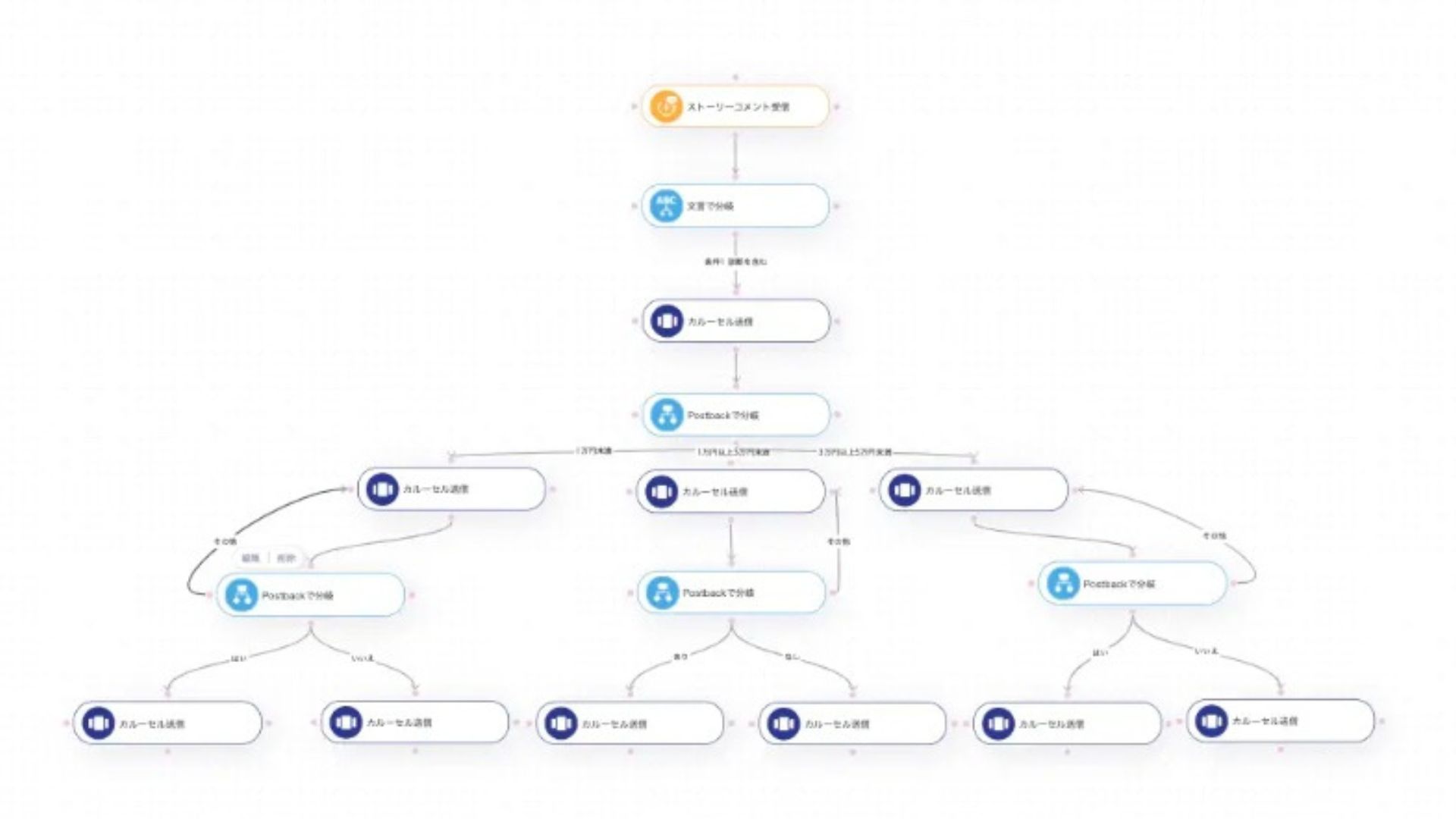
By selecting message templates from the scenario creation screen, you can easily create scenario distribution flows with only click operations.
Scenario distribution enables the following types of delivery:
- Distribute limited coupons and discount information to new followers
- Deliver recommended product information based on user behavior and interests
- Distribute guidance such as reviews and case studies
2. Segmented Distribution
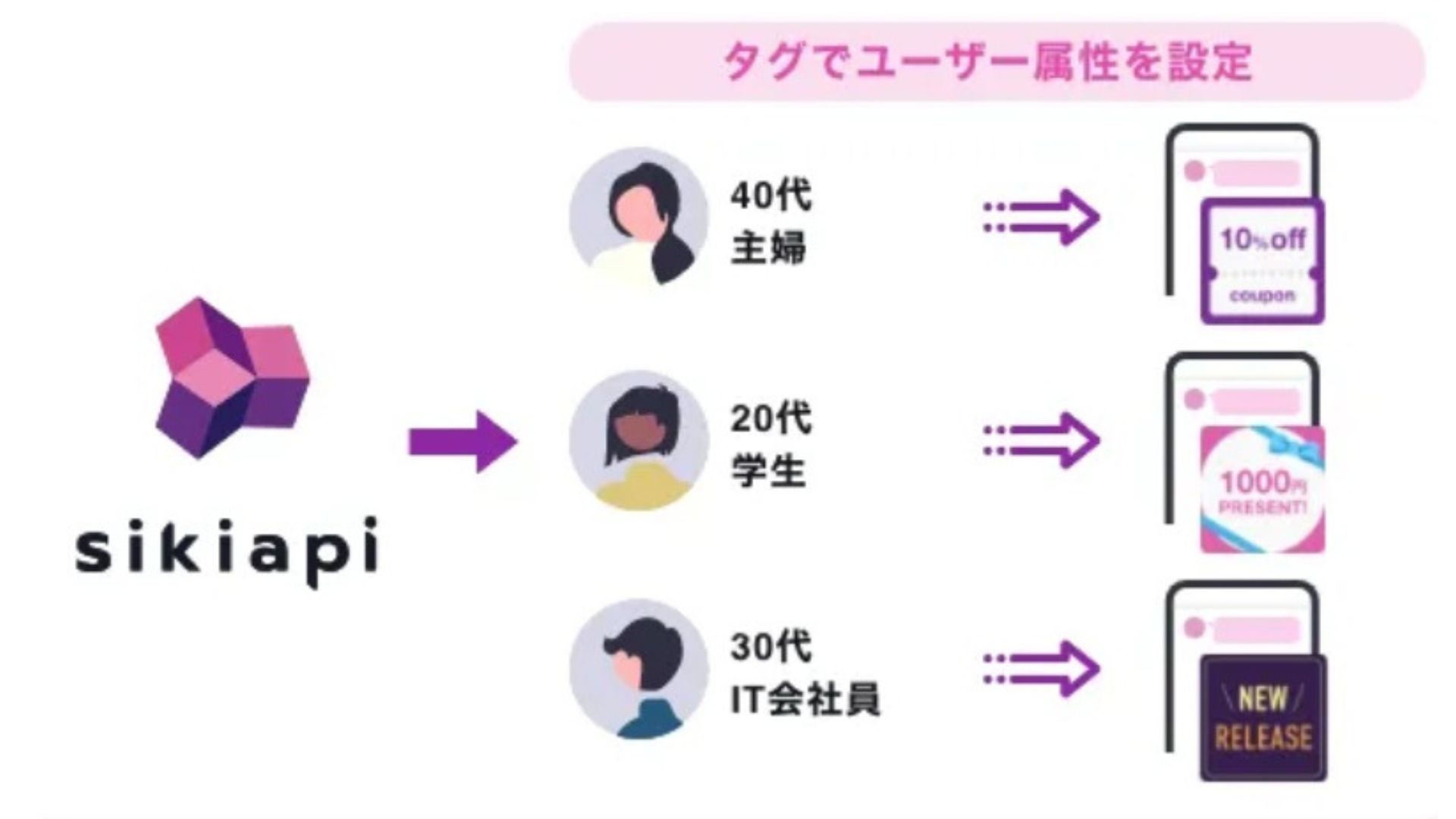
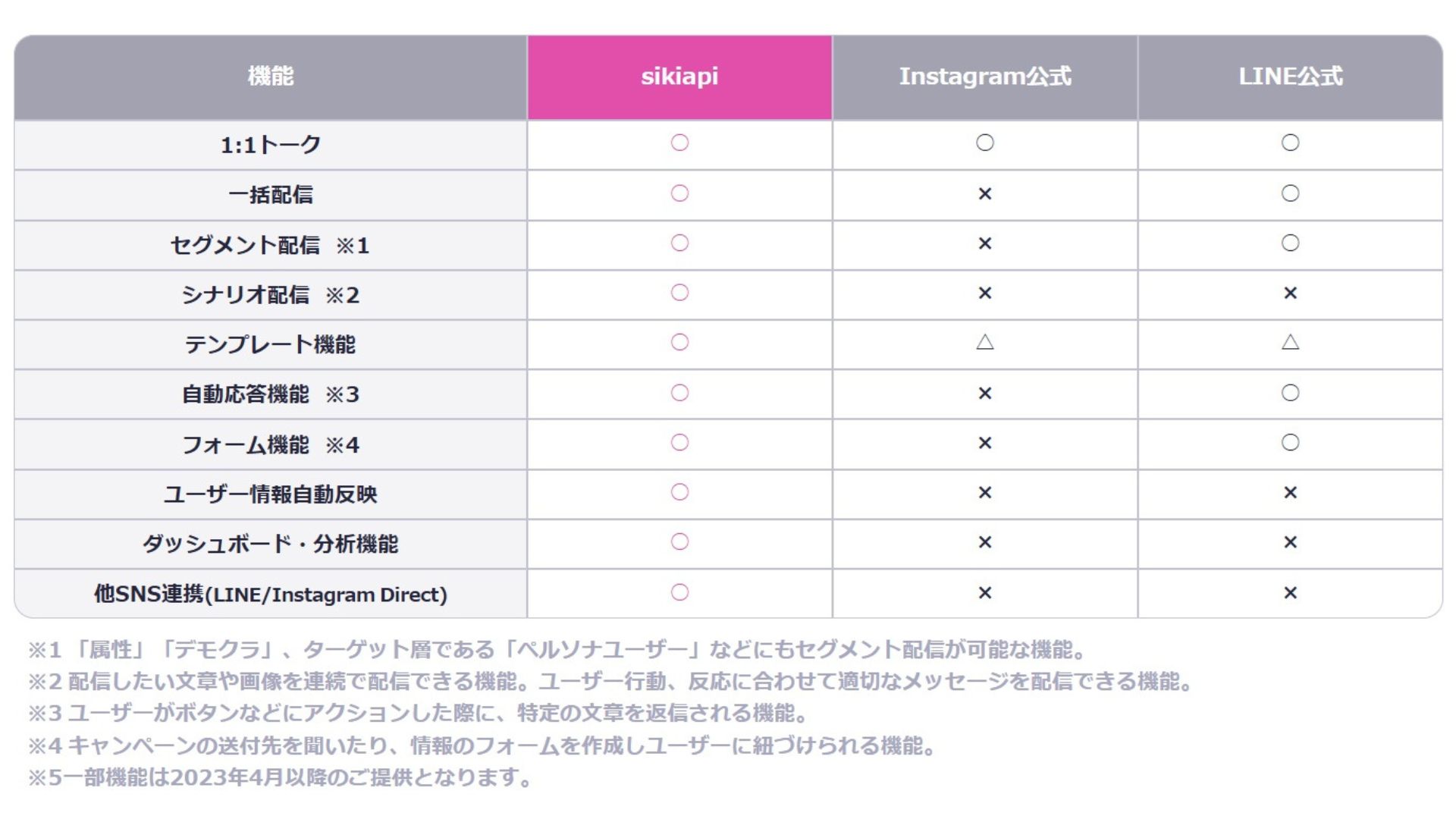
It is possible to deliver messages tailored to user attributes such as age, gender, and purchase status. By implementing an appropriate approach for each person, response rates are improved.
3. Issue Unique sikiapi ID and Password
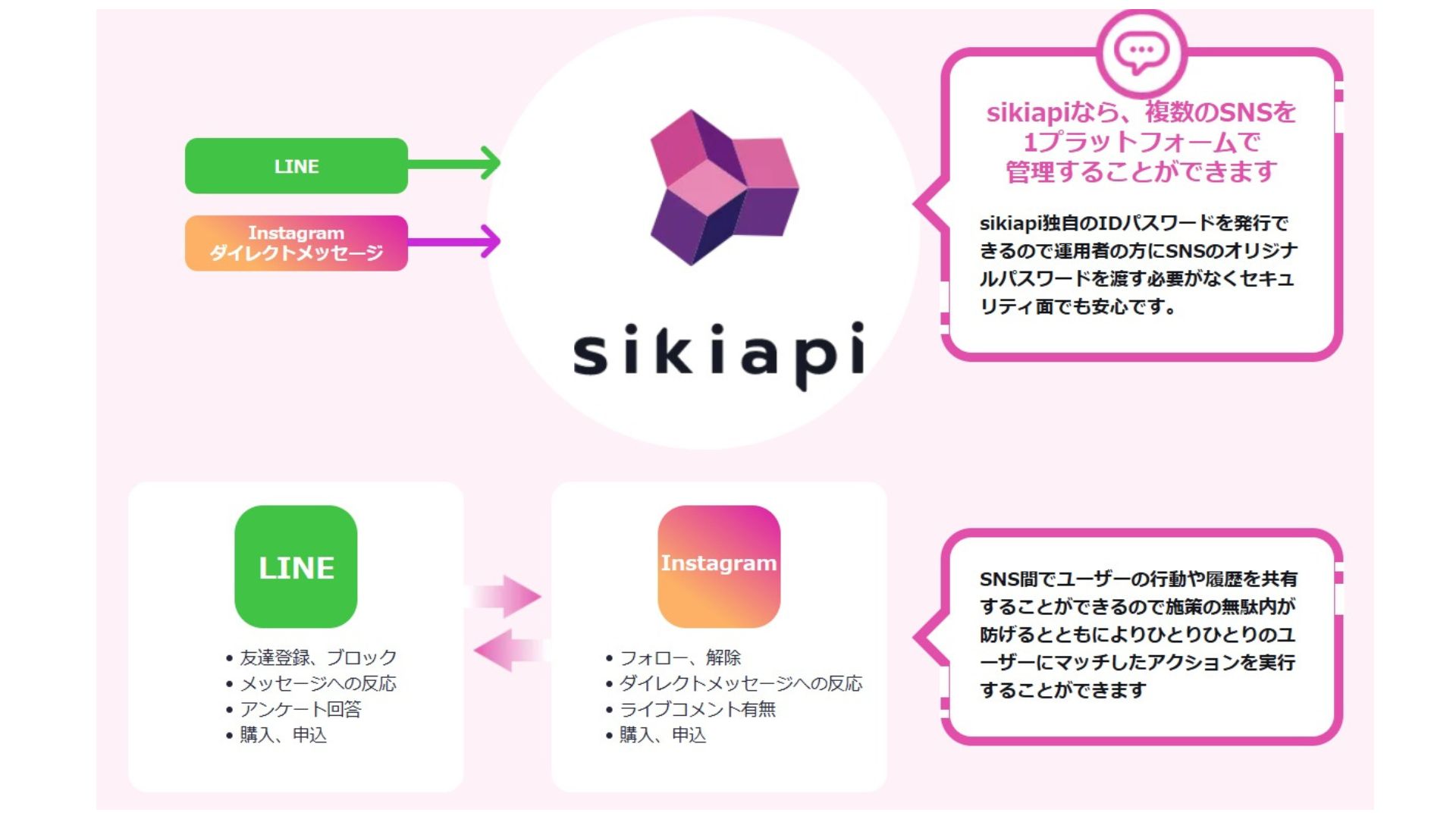
Because unique sikiapi IDs and passwords are issued, there is no need to share LINE or Instagram account credentials with operators, ensuring security in usage.
4. Other SNS Integration (LINE/Instagram Direct)
User actions and history can be shared between LINE and Instagram, reducing management effort and avoiding duplicate message distribution, enabling actions best suited for the user.
Other features include automated response functions, form functions, automatic user information reflection (not possible with standard LINE or Instagram features), and dashboard analysis functions.
If you want to improve the efficiency of your SNS operations and achieve more results, please utilize sikiapi. For questions regarding implementation or detailed information, please feel free to contact us.
| Item | Content |
|---|---|
Service Name | sikiapi |
Company Name | Tomira Inc. |
Official Site | https://sikiapi.com/ |