

Changes in SEO Strategy Brought by Generative AI
Search engines are evolving from mere information retrieval tools into "Answer Engines" that directly answer user questions. At the heart of this shift is the integration of generative AI technology, led by Google's AI Overview (formerly SGE). AI Overview displays AI-generated summaries at the top of search results, providing users with rapid access to information.
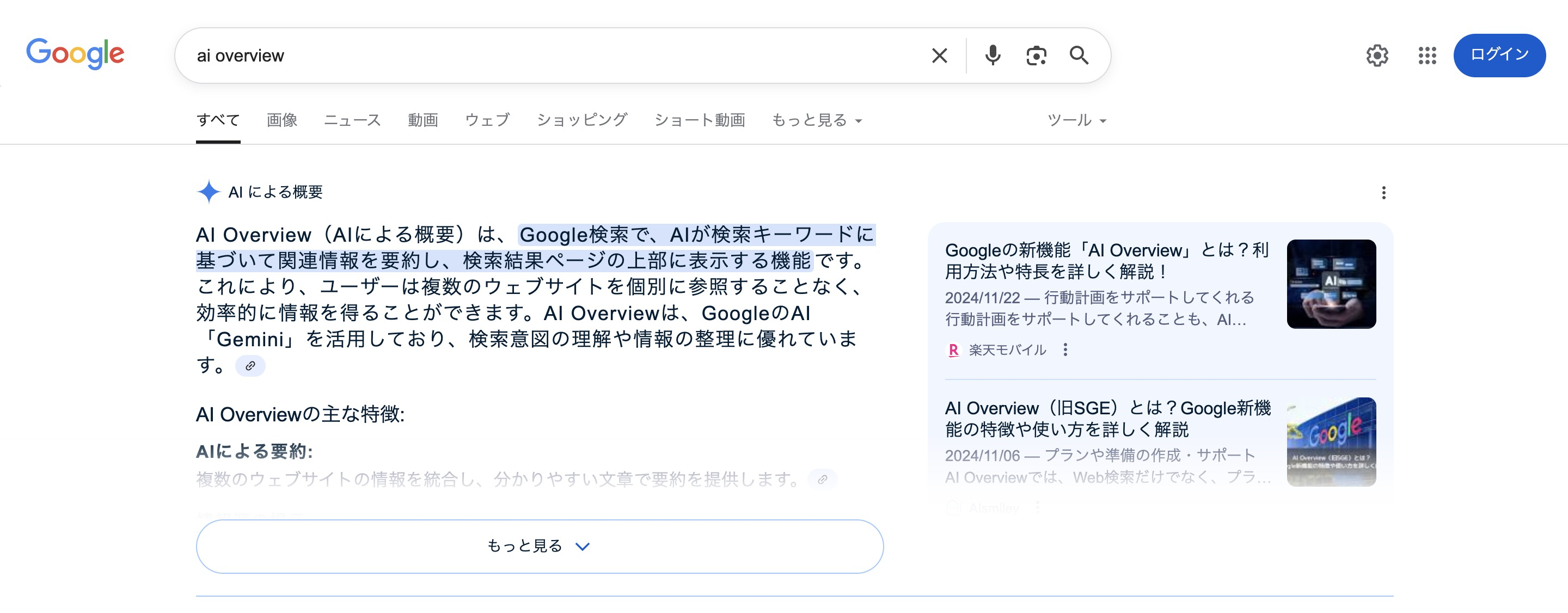
The rise of AI-driven search is dramatically changing user behavior. Previously, users would browse multiple sites, spending time collecting and comparing information before making a decision. Now, they expect immediate information and efficient decision-making through the quick and concise answers provided by AI. As a result, "zero-click searches," where traffic patterns shift because AI completes the answer within the search results, are increasing.
What is LLMO (Large Language Model Optimization)?
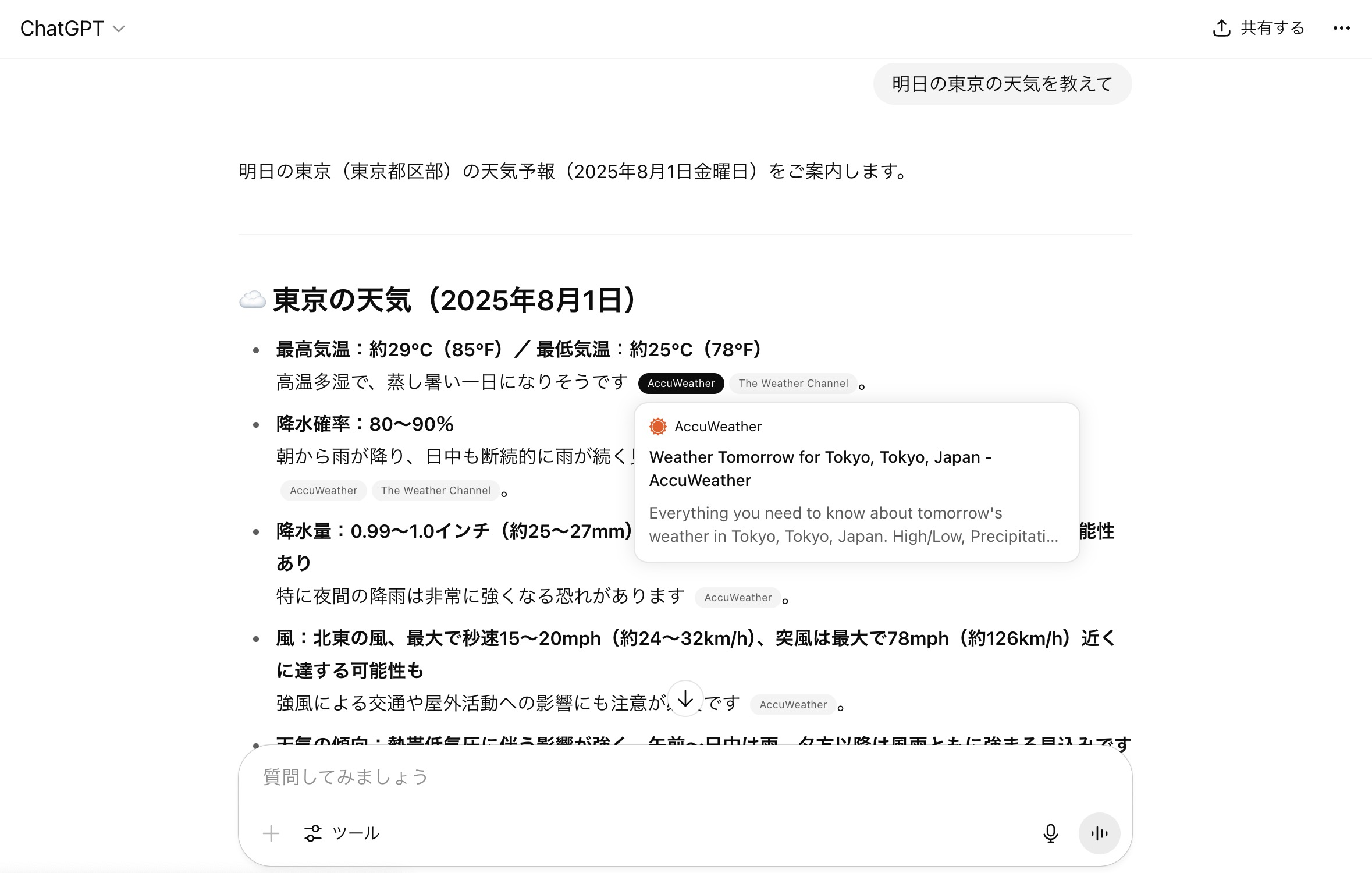
With the evolution of generative AI, search behavior is beginning to shift from "clicking links" to "reading AI summaries." LLMO (Large Language Model Optimization) has emerged to address this change.
LLMO refers to an optimization strategy aimed at getting your company's information adopted into the responses of conversational AIs like ChatGPT. It is an approach that positions content not just as a source of information, but as the "definitive answer" itself.
Why is LLMO Important Now?
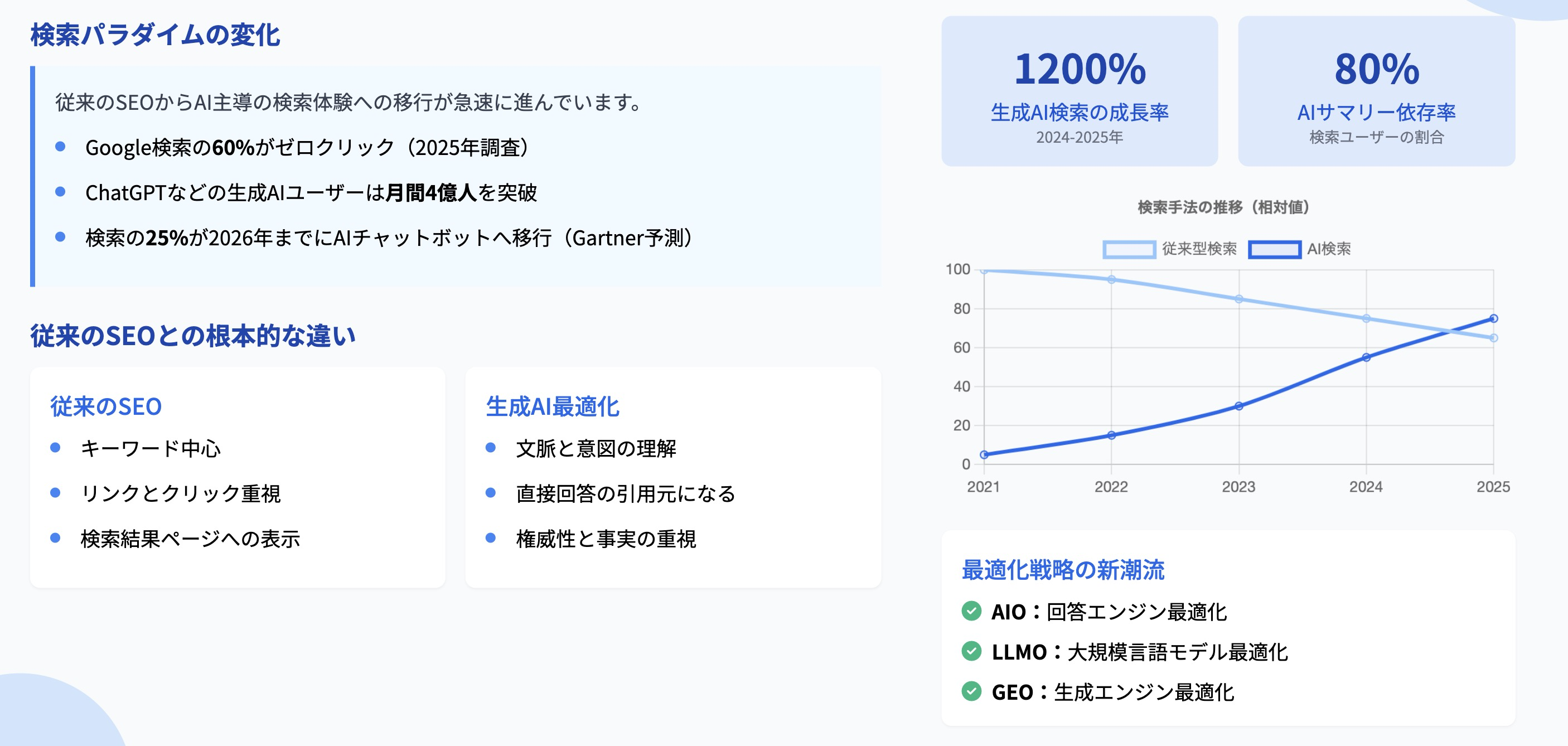
The widespread adoption of generative AI, particularly Large Language Models (LLMs), means users are increasingly obtaining information directly from search results in a conversational format. While traditional SEO focuses on "raising search rankings," LLMO focuses on "creating information that is cited and trusted by AI."
Since AI now selects, summarizes, and cites information based on context, structure, and reliability, traditional "keyword-centric" SEO strategies are no longer sufficient. If your information is not adopted by AI, there is a risk that users will be satisfied with the AI's answer and leave without visiting your site (increasing zero-click searches), resulting in a loss of search inflow opportunities. Thus, LLMO has become indispensable. Information sharing in the AI era must be "structured in a way that AI wants to feature it."
Positioning of LLMO in the AI-Era Search Optimization Framework
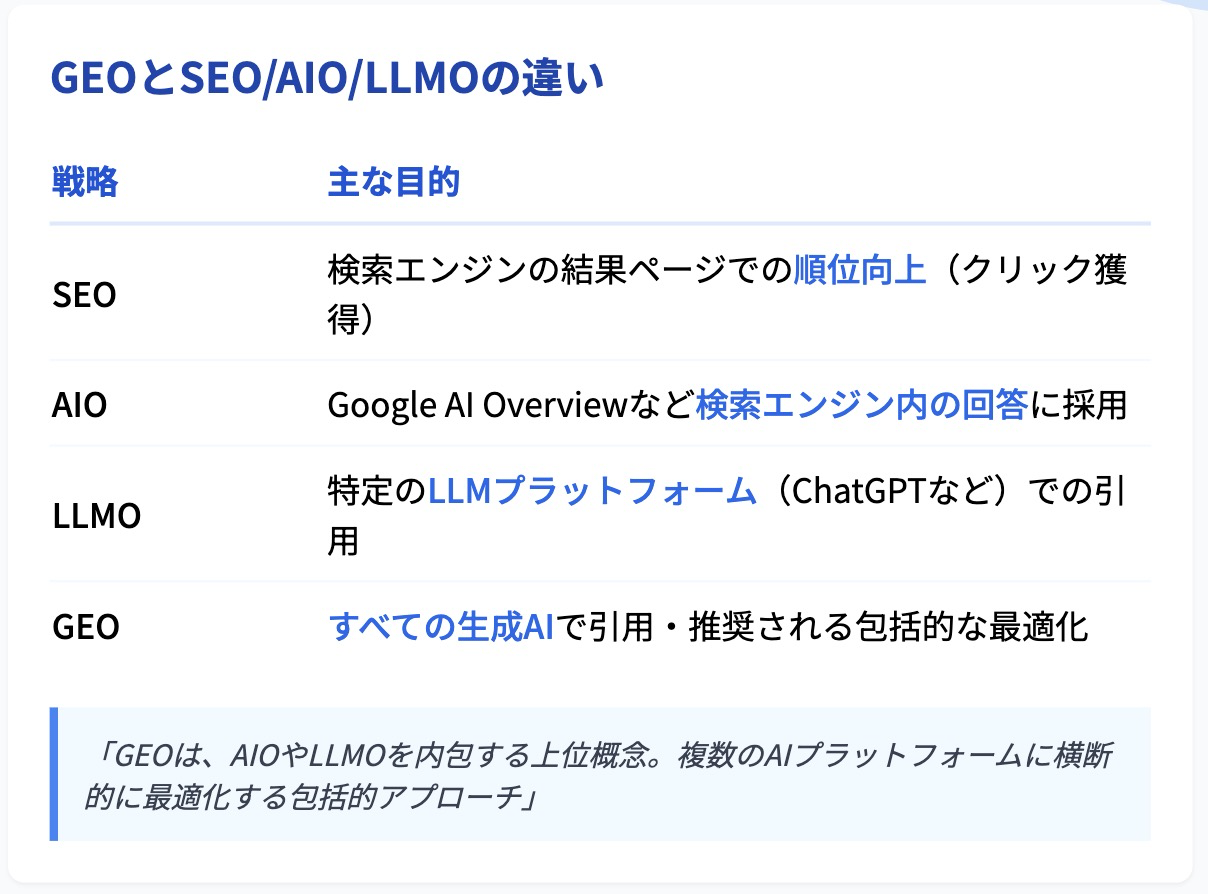
LLMO is part of a comprehensive umbrella term called "AI SEO," which encompasses all search optimization strategies in the AI era. AI SEO consists of AIO (Answer Engine Optimization), LLMO, and GEO (Generative Engine Optimization).
AIO (Answer Engine Optimization)
Optimization strategies aimed at making your company's information more likely to be adopted as the basis for "answers" generated directly by search engines, such as Google's AI Overview.
LLMO (Large Language Model Optimization)
Optimization aimed at getting your company's information adopted into the responses of conversational AIs (ChatGPT, Gemini, Claude, etc.).
GEO (Generative Engine Optimization)
A broad concept referring to optimization for generative AI engines as a whole, including AIO and LLMO.
While these strategies are extensions of traditional SEO, they have unique focal points for AI optimization.
Strategies for LLMO Success
LLMO aims for content to be selected as a "trusted source of information" by AI. For this to happen, the following elements, similar to AIO strategies, are critical:
Strong Reinforcement of E-E-A-T (Experience, Expertise, Authoritativeness, Trustworthiness)

Essential for AI to reference content as a reliable source, it requires a clear demonstration of expertise and real-world experience. Boost overall site trust through operator information, corporate philosophy, detailed author/supervisor profiles, and specific listings of qualifications, achievements, and backgrounds.
AI evaluates reliability and reputation by referring to all types of web information about a brand, including citations/mentions from authoritative sites, Google Business Profiles, and various social media platforms.
Expansion of Q&A (Question and Answer) Content
Content that directly addresses user search intent in a format that AI can easily extract information from is more likely to be cited.
Comprehensive Content and Primary Information
Value-added information not found elsewhere, such as proprietary survey data, unique corporate analysis, and detailed experience reports, is highly valued by AI for citation.
Clear, Concise Sentences and Structure for AI Understanding
Maximize AI information extraction efficiency through structured information presentation. It is effective to use a "conclusion-first" approach, create a hierarchical structure with clear headings (H2, H3), and use bullet points and tables effectively.
Detailed Implementation of Structured Data (Schema.org)
This functions as "translation data" for AI to accurately understand and utilize content meaning. For example, implementing Product and Review schemas within a product review article clearly communicates content relationships to AI.
Mobile-Friendly and Display Speed Optimization
Since AI Overviews are frequently viewed on mobile, mobile compatibility is a prerequisite, including Core Web Vitals optimization (LCP, FID, CLS) and comprehensive responsive design.
LLMO should be seen not as a concept in conflict with SEO, but as two complementary pillars. LLMO measures can only thrive on a solid SEO foundation. Synergistic effects can be expected by using SEO tools for competitor analysis, keyword discovery, and technical issue detection, then reflecting those insights in LLMO.
Benefits of Mastering LLMO
By adopting LLMO, companies can enjoy the following SEO advantages:
Obtaining AI Citations
The primary goal of LLMO is to have information understood, evaluated, and cited by AI systems (ChatGPT, Google AI Overview, etc.). This creates new customer touchpoints through AI-generated responses.
New Customer Touchpoints and Brand Recognition
In an era where AI becomes a primary intermediary between consumers and brands, AI-generated information will have a decisive influence on the purchasing process. Through LLMO, businesses can intervene in the purchasing journey—from information gathering via AI search to brand recognition in AI answers and comparisons in AI recommendations—leading to final decision-making and purchase actions.
Optimization of Reach to Target Audiences
LLMO provides content optimized for the search intent and needs of specific audiences. This attracts user interest and improves engagement.
Gaining a Competitive Edge
Adapting to the search experience of the generative AI era and providing content favored by AI allows you to establish superiority over competitors.
Summary
SEO in the generative AI era has evolved to a new dimension through the use of LLMO. For companies aiming for high-quality content generation and improved user experience, LLMO will become an indispensable strategy. In the ever-evolving world of SEO, it is crucial to continue efforts to maintain competitiveness by utilizing LLMO. LLMO is a powerful tool for companies to maximize SEO outcomes and enhance digital marketing effectiveness. By adopting LLMO, businesses can build content strategies better tailored to their targets and achieve sustainable growth.
The nature of SEO is changing significantly due to technological advancements such as AIO and LLMO. In an age where simply mass-producing content is unlikely to yield results, strategic design and continuous improvement are essential.
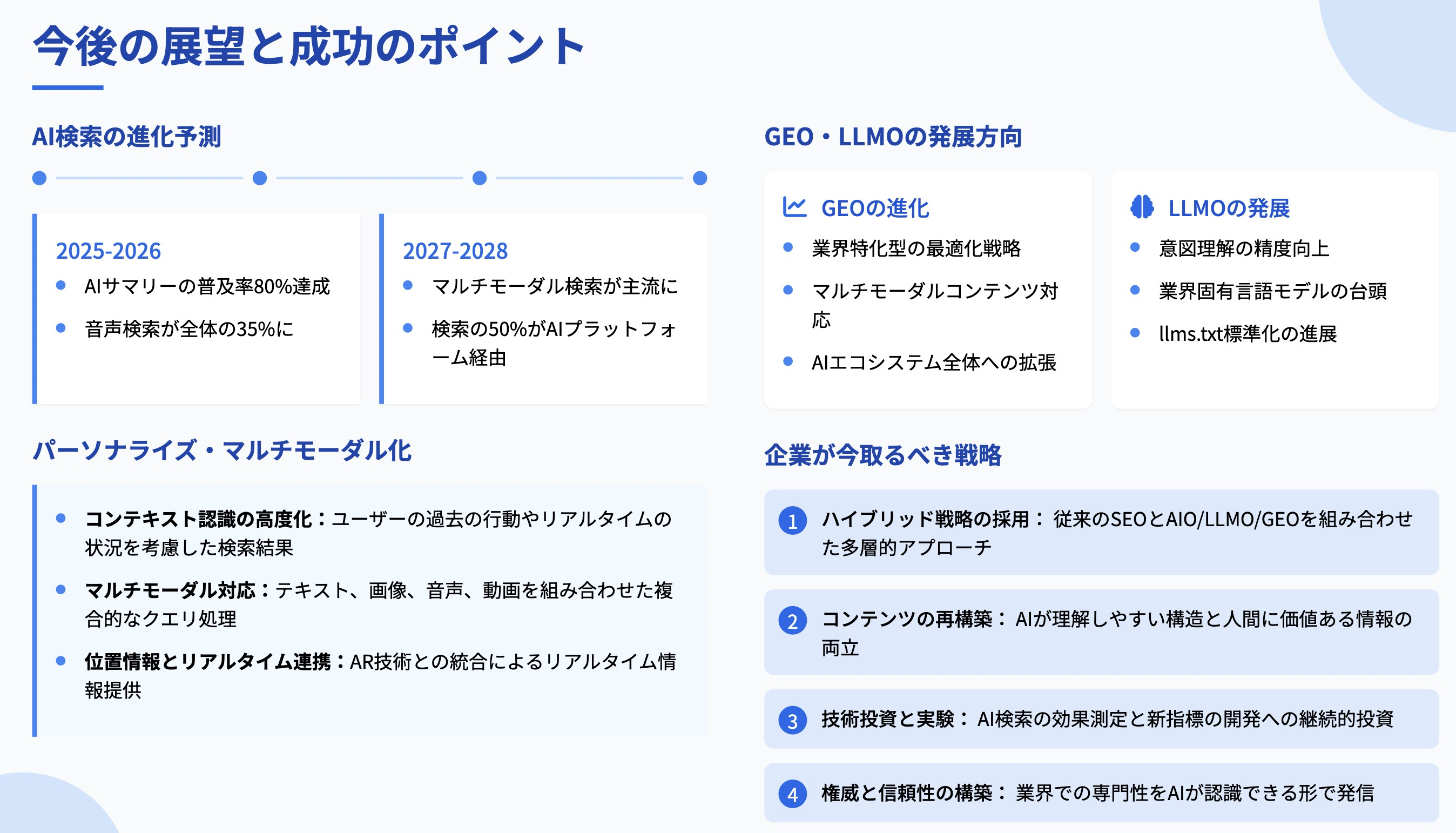
We provide optimal support tailored to your company's goals, from the latest SEO measures leveraging AI characteristics to keyword selection, content production, and performance analysis.
If you're wondering what kind of SEO strategy your company needs or want to try AI-powered SEO, please feel free to consult with us.
▶︎Learn more about Tomira's SEO services